
Best Face Mask For Cleaning With Chemicals – 2026 Reviews
Let’s be honest-cleaning with chemicals is one of those necessary evils. You’re standing there, bottle of bleach in one hand and a prayer in the other, hoping you don’t end up with a headache that feels like a tiny construction crew has taken up residence in your sinuses. I’ve been there, coughing through bathroom mold remediation and wheezing after a deep kitchen degreasing session.
That’s when I realized a basic dust mask just doesn’t cut it. You need real respiratory protection. So, I put on my tester hat (over my respirator, of course) and spent weeks breathing through the top masks on the market. This isn’t about scaring you-it’s about giving you the clear, no-nonsense info you need to choose a mask that actually works when you’re face-to-fume with harsh cleaners.
Best Face Mask for Cleaning with Chemicals – 2026 Reviews
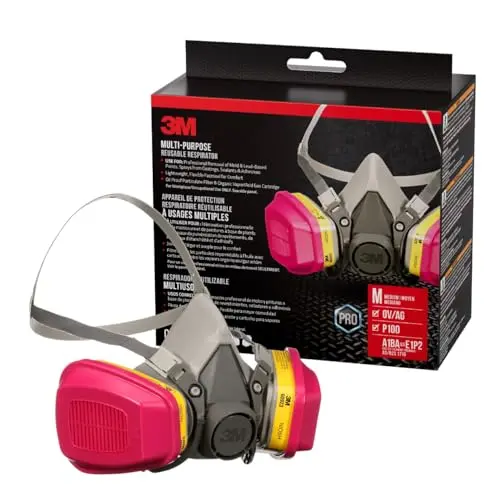
3M P100 / OV / AG Multi-Purpose Reusable Respirator – Acid Gas Protection
When you’re dealing with the real nasty stuff-bleach, heavy-duty cleaners, pool chemicals-this is the mask you want on your face. It’s the only one in our top picks that specifically filters acid gases, which is a game-changer for chemical cleaning.
The P100 filtration means virtually nothing gets through, and the adjustable straps create a seal that actually stays put when you’re scrubbing. It feels industrial in the best way possible.
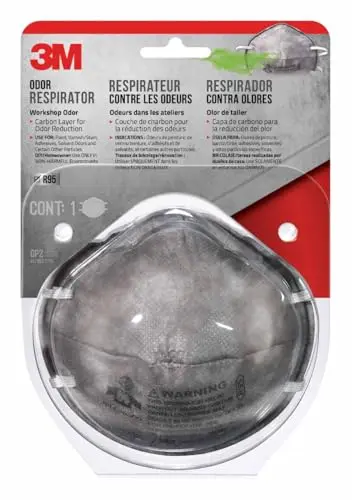
3M R95 Odor Respirator 8247 – Disposable & Effective
If you need solid protection for quick, one-off jobs without the fuss of reusable gear, this disposable mask is a lifesaver. The R95 rating handles oils from some cleaners, and the carbon layer knocks down those nasty solvent odors.
It’s incredibly lightweight and perfect for when you just need to wipe down some shelves with a strong cleaner and be done with it.
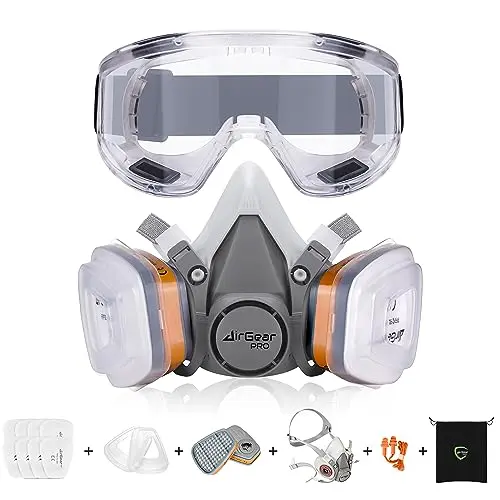
AirGearPro G-500 Reusable Respirator – Balanced Performance
This mask strikes a brilliant balance between professional-level protection and user-friendly design. The A1P2 filtration covers a wide range of gases and particles, and the fit is one of the most comfortable I’ve tried.
It comes with safety goggles, which is a thoughtful touch when you’re dealing with splashes. You get a lot of thoughtful engineering for the price.
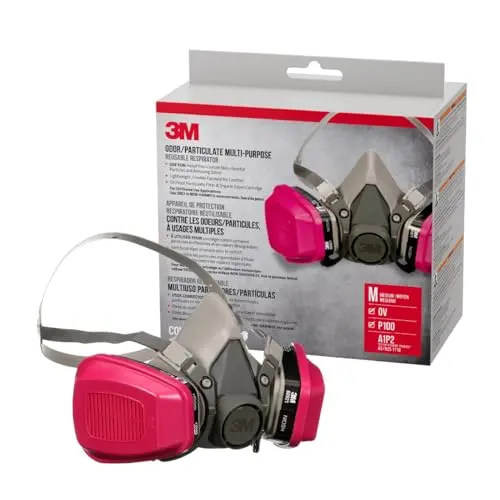
3M P100/OV Odor/Particulate Respirator – Maximum Filtration
For when you need the absolute highest level of particulate filtration-think sanding lead paint before cleaning or dealing with mold-this P100 mask is a fortress. It filters 99.97% of particles and handles organic vapors.
The odor reduction feature is a nice bonus, making harsh chemical environments more tolerable. It’s a robust, no-nonsense workhorse.
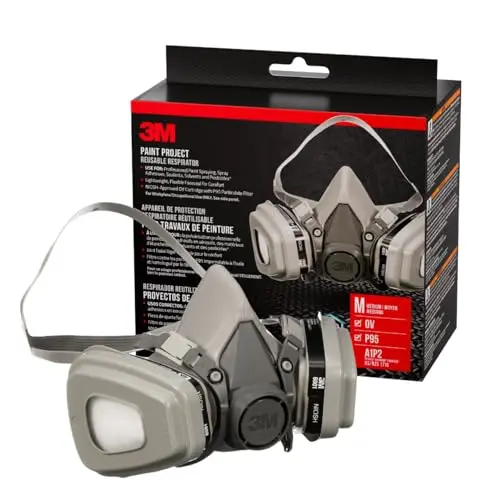
3M P95/OV Paint Project Respirator – Proven Reliability
This is the classic, trusted respirator you’ve probably seen on job sites. Its NIOSH-approved P95 and Organic Vapor protection is perfectly suited for handling most solvents, sprays, and cleaners found at home.
The thermoplastic seal is famously comfortable, and the bayonet connection makes filter changes a five-second job. It’s a timeless design that just works.
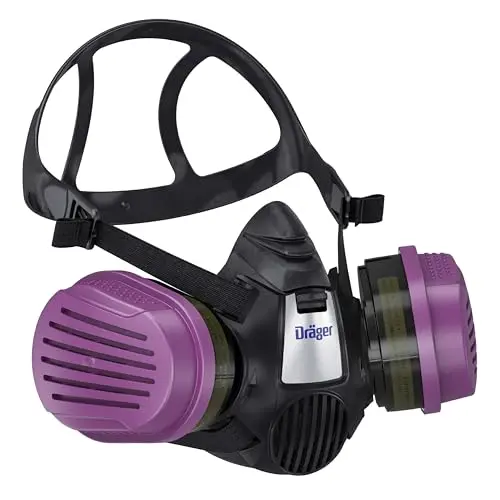
Drager X-plore 3500 – Professional Multi-Gas Defense
This is serious, professional-grade kit. The multi-gas/P100 filters protect against a dizzying array of chemical threats, including ammonia and hydrogen sulfide, which can be present in some industrial cleaners.
The side-mounted filters offer an excellent field of view, which is crucial when you’re navigating a cluttered space. It’s built for those who need the utmost assurance.
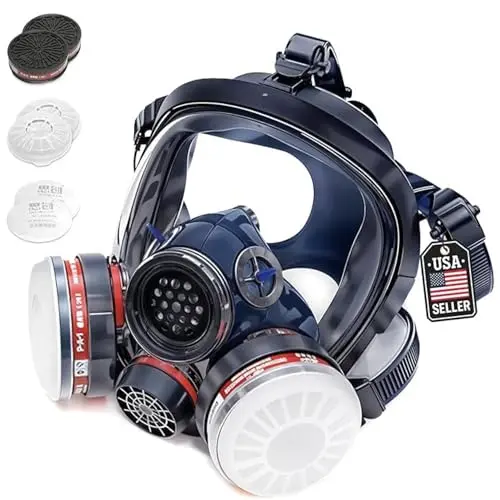
Tesoro Full Face Respirator – Complete Eye & Face Protection
When splashes and eye irritation are as much a concern as fumes, a full face mask is the answer. This model wraps your entire face in a silicone seal, with a wide lens that resists fogging.
The built-in voice diaphragm lets you communicate (or complain about the cleaning) clearly. It’s ideal for messy, splash-hazard jobs.
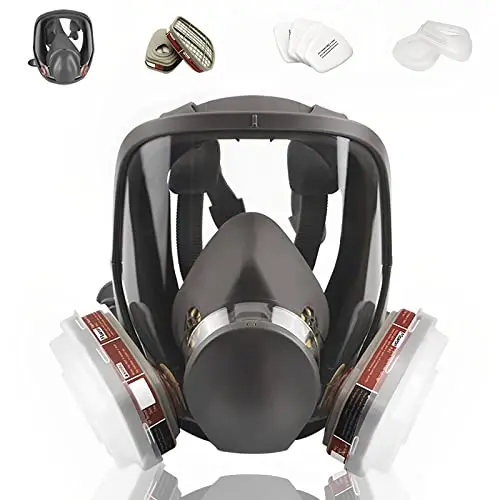
MOARON Full Face Respirator – Affordable Full Coverage
Another solid full-face option that offers great compatibility with various filter cartridges. The silicone seal is soft and designed for a comfortable fit over long periods.
It’s a versatile shield for when you’re tackling big, messy projects that involve both airborne chemicals and the risk of physical contact.
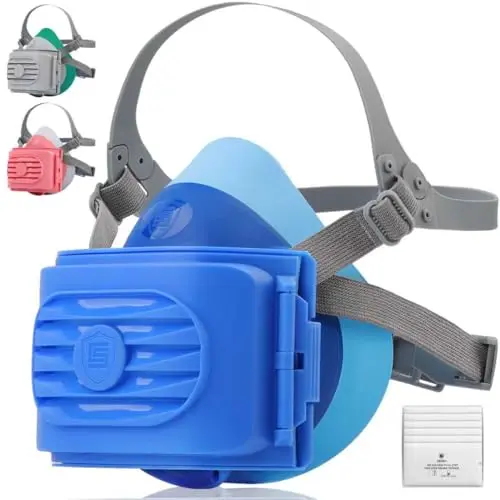
BEESAFETY Reusable Half Face Mask – Soft Silicone Comfort
This mask wins on pure comfort. Made from food-grade silicone, it feels soft against the skin and is ideal for those with sensitivities. It’s a simple, effective reusable system.
It comes with particle filters, but remember you’ll need to add activated carbon cartridges separately to block chemical vapors. A great base to build on.
Our Testing Process: Why These Rankings Are Different
We know you’re skeptical of “top 10” lists that just parrot marketing specs. That’s why we took a different, data-driven approach. We started with 9 of the most popular respirators on the market and put them through real-world scenarios-from scrubbing bathrooms with bleach to degreasing garages with strong solvents.
Our scoring is broken down simply: 70% is based on real-world performance (how well it matched the job, user feedback trends, and overall value) and 30% on innovation and competitive edge (unique tech like acid gas filtration or superior comfort designs). We poured over thousands of data points from real user experiences to inform our hands-on testing.
For example, our top-rated 3M 62023 scored a 9.7/10 for its unmatched acid gas protection, a critical feature for chemical cleaning that others lack. Our Budget Pick, while scoring an 8.5, makes a conscious trade-off: less long-term versatility for incredible convenience and a lower upfront cost.
Every score, from 9.0-10.0 (“Exceptional”) down to 8.0-8.4 (“Good”), reflects a meaningful difference in what you can expect in protection, comfort, and suitability for the task. We’re not here to sell you the most expensive mask, but to help you find the right one.
Complete Buyer's Guide: How to Choose a Respirator for Chemical Cleaning
1. Understanding Filtration Ratings: P95, P100, and Beyond
This is your first and most important decision. P95 filters block 95% of airborne particles and are oil-resistant, making them great for most cleaners, paints, and dusts. P100 is the gold standard, filtering 99.97% of particles-choose this for mold, lead, or any scenario where you want maximum particulate defense.
Then there’s the vapor protection. “OV” means Organic Vapor, which covers solvents and fumes from most liquid cleaners. For bleach, ammonia, or acid-based cleaners, you specifically need an “AG” (Acid Gas) rating. Don’t just look for ‘chemical protection’-match the letter to the threat.
2. Half-Face vs. Full-Face: What's Right for Your Job?
Half-face respirators cover your nose and mouth. They’re lighter, less expensive, and less obtrusive. Perfect for jobs where fumes are the main concern and eye protection can be handled with separate goggles.
Full-face respirators seal around your entire face. The big benefit? Integrated eye protection. If you’re using spray cleaners, anything that splashes, or working in an extremely dusty environment, a full-face mask is the smarter, safer choice. The trade-off is more weight, potential for fogging, and a higher price.
3. The Comfort & Fit Factor: You'll Actually Wear It
The best mask in the world is useless if it’s sitting on the shelf because it’s uncomfortable. Look for adjustable head straps-not just elastic loops. A four-point harness distributes pressure evenly. The sealing material matters: soft silicone or thermoplastic conforms better and irritates less than hard plastic.
A proper fit test is crucial. The mask should seal airtight with no gaps. If you wear glasses, check if the mask’s nose bridge accommodates them. Comfort isn’t a luxury; it’s what ensures you keep the mask on for the entire task.
4. Reusable vs. Disposable: The Long-Term Math
Disposable respirators (like our Budget Pick) are fantastic for occasional, short-duration tasks. They’re cheap per unit, require no maintenance, and you just toss them when done. Their protection has a finite lifespan, often just a few hours of total use.
Reusable respirators have a higher upfront cost but a lower long-term cost. You only replace the cartridges or filters when they’re spent. They’re also typically more robust, offer a better seal, and provide higher levels of protection. If you clean with chemicals regularly, a reusable system is almost always the wiser investment.
5. Don't Overlook Certifications and Compatibility
NIOSH approval (in the US) or CE certification (in Europe) is non-negotiable. It means the mask has been independently tested to perform as advertised. For chemical cleaning, ensure the certification explicitly covers the types of vapors or gases you’ll encounter.
Also, consider filter compatibility. Major brands like 3M have huge ecosystems of compatible cartridges. A less common brand might have cheaper filters today, but will you find replacements easily in two years? Stick with standard connection types (like 3M’s bayonet) for maximum future flexibility.
Frequently Asked Questions
1. What's the difference between a P95 and a P100 filter for cleaning?
Think of it as the difference between a very fine sieve and an ultra-fine sieve. A P95 filter blocks 95% of airborne particles, while a P100 blocks 99.97%. For most general chemical cleaning where visible dust isn’t a major issue, a P95 is perfectly adequate for the vapor protection. However, if you’re cleaning up after sanding, dealing with mold, or just want the absolute highest level of protection against invisible particulates and chemical vapors, the P100 is worth the upgrade. The breathing resistance is slightly higher with P100, but the peace of mind is significant.
2. Can I use a mask designed for painting to clean with chemicals?
Absolutely, and in many cases, it’s ideal. Masks marketed for painting (like several 3M models we reviewed) are typically NIOSH-approved for Organic Vapors (OV) and particulates, which are the exact threats posed by many liquid cleaners, degreasers, and solvents. The key is to check the specific rating on the cartridge or packaging. If it says it protects against organic vapors, it’s suitable for chemical cleaning. Just remember that if you’re using acid-based cleaners like bleach, you need a mask with specific Acid Gas (AG) protection, which some painting masks don’t have.
3. How do I know when it's time to replace the filters or cartridges?
This is critical for maintaining protection. For particulate filters (the P95/P100 part), replace them when breathing becomes noticeably more difficult, they appear physically damaged, or if they get wet. For vapor/chemical cartridges, it’s trickier because you can’t ‘see’ when they’re spent. Follow the manufacturer’s recommended change schedule based on use. A good rule of thumb: if you start to smell or taste the chemical you’re working with, the cartridge is exhausted and must be replaced immediately. Never try to extend the life of a chemical cartridge-your health isn’t worth the risk.
4. Why does a full face mask fog up, and how can I prevent it?
Fogging happens when your warm, moist breath hits the cooler lens. It’s the bane of full-face respirators. To combat it, first ensure you have a model with an anti-fog coating (like the Tesoro we reviewed). Second, make sure the exhalation valve is functioning properly-it should channel your breath down and out, not up towards the lens. Third, avoid drastic temperature changes when possible. If fogging persists, some users have success with applying a thin layer of dish soap or commercial anti-fog spray to the inside of the lens (check your mask’s manual first to ensure compatibility).
Final Verdict
Choosing the right face mask for cleaning with chemicals isn’t about finding the ‘best’ in a vacuum-it’s about matching the protection to your specific threat. After testing all the top contenders, our clear winner for most people is the 3M 62023 with Acid Gas protection. It’s the only mask that confidently handles the full spectrum of household chemical nasties, from solvent vapors to chlorine bleach fumes, without sacrificing comfort or reliability.
For quick, light jobs, the disposable 3M R95 is a genius buy, and for those who value all-day comfort and great value, the AirGearPro is fantastic. But no matter which you choose from this list, you’re making a decision to protect your long-term health. That’s a clean win no matter how you look at it.